Advancing Sustainable Forest Governance
AFF harnesses evidence, capacity building, and multi-stakeholder partnerships to transform African forestry livelihoods.
Resources & Highlights in this Area
Key Publications


Recent Stories & News

Context
The continuing shortage of capacities of African forestry and allied institutions represents a major constraint to the analysis, design and implementation of effective forest management programmes. Gaps in institutional leadership and management, as well as in skills and knowledge to develop and facilitate effective and sustained uptake of available technologies, represent perhaps the biggest challenges for SFM in Africa today. In addition to these capacity gaps in technical forest and tree resources management, entrepreneurship (specifically at community level) and policy analysis capacities represent significant weak areas. There is therefore need for the development of strategic and technical human capacity in the institutions that drive the forestry agenda at national and regional levels.
The lack of capacity is also a hindrance to the domestication and implementation of international and regional instruments, including policies and agreements related to forests (dealt with in Programme 5). To enhance effective management of forests at national and trans-boundary levels, the provision of technical and financial support is needed towards national and sub-regional governmental and non-governmental institutions dealing with forestry. Investments are needed in terms of finances, technology, training, equipment, tools and information to enhance the capacity of these institutions to effectively manage forest and tree resources.

Examples of subjects, challenges and opportunities to be addressed
Assessing gaps in capacities and skills; analyse qualitative and quantitative gaps in all relevant institutions and bodies to address both traditional forest and tree management practices and new emerging issues in forestry; key areas to assess include silviculture, tree seed improvement, community forest management, value addition and consumer requirements, protection against damage by pests and diseases, the roles and potentials of forests and trees in climate change adaptation and mitigation, and trans-boundary forest issues (hydrology, trade, bio-diversity protection, etc.).
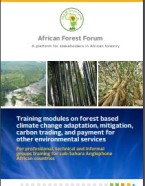
Development of means to address the identified gaps; generate the knowledge required through studies, reviews and research – both based on activities carried out in AFF’s Programmes 1-5 (see above) and by other institutions; develop contextualized training materials (compendiums) and training modules; organise relevant training based on the compendiums developed by AFF, either in AFF’s own programme or by promoting use of such material by other training institutions.